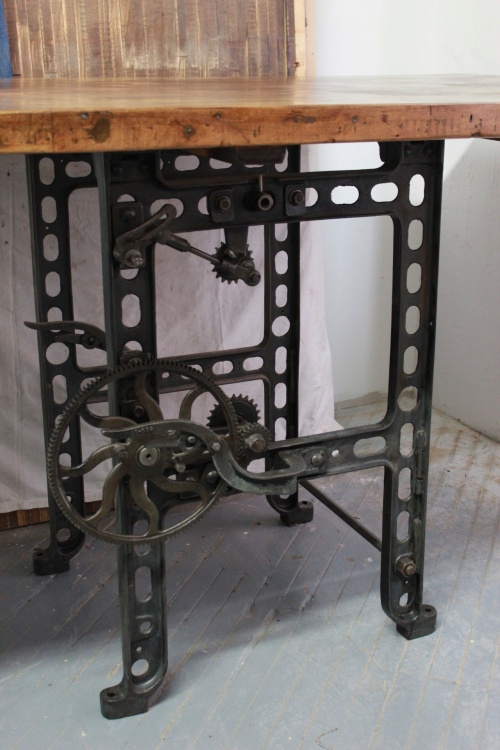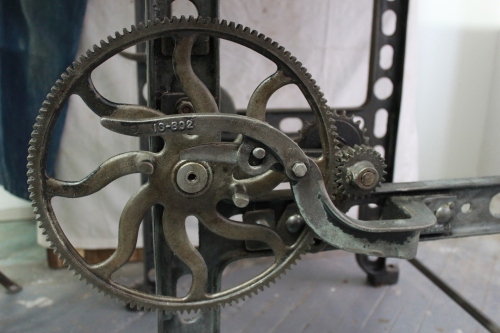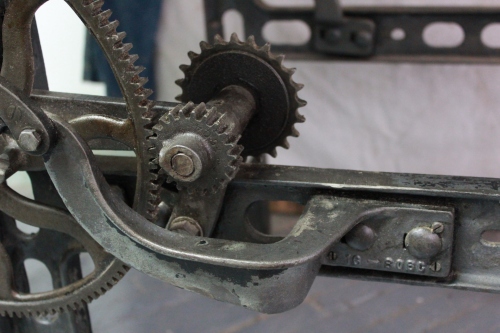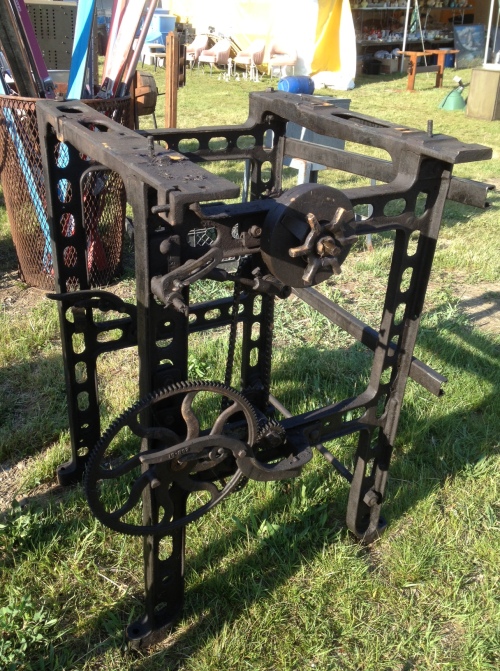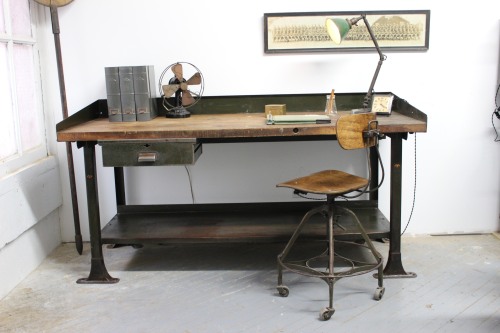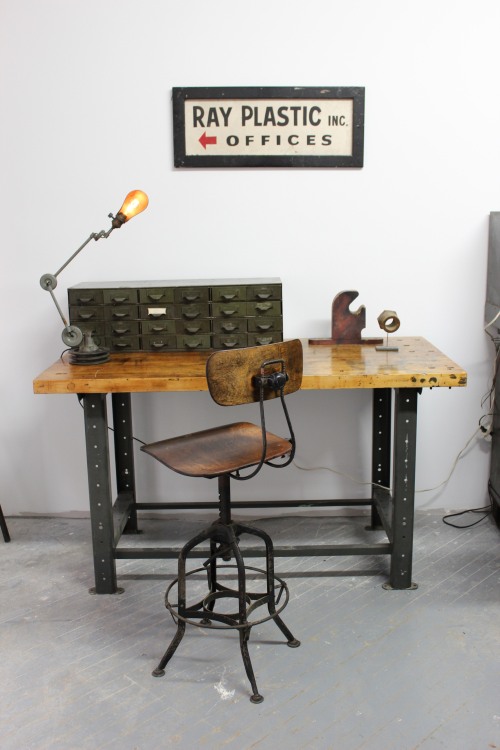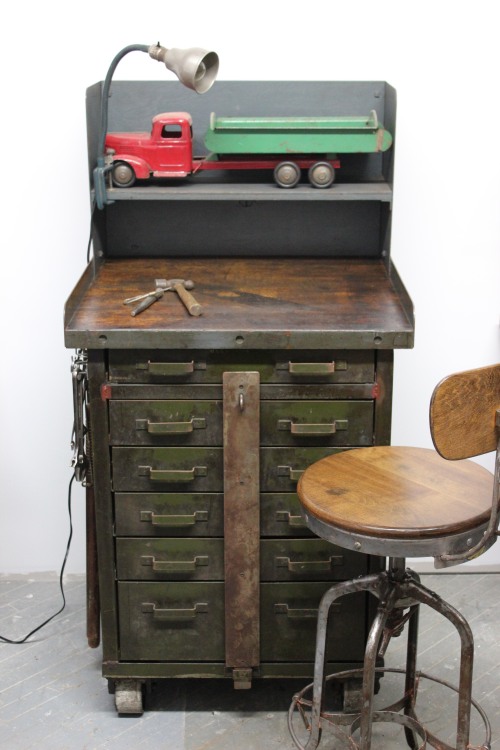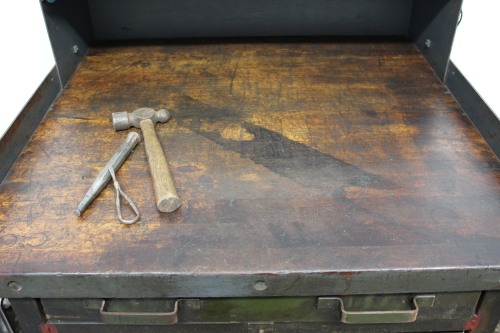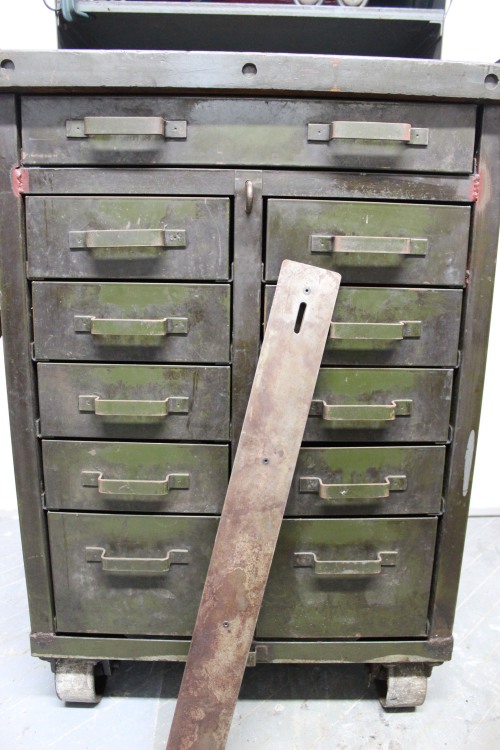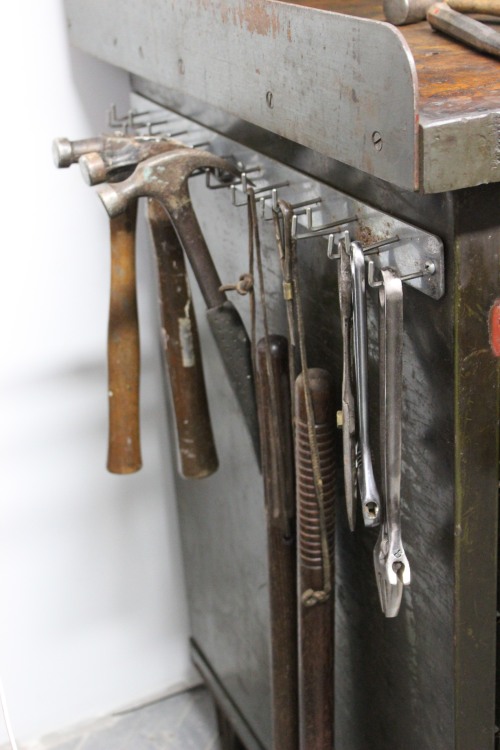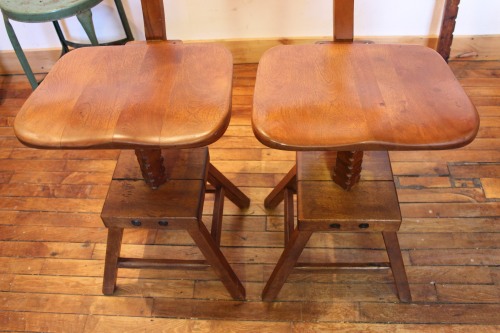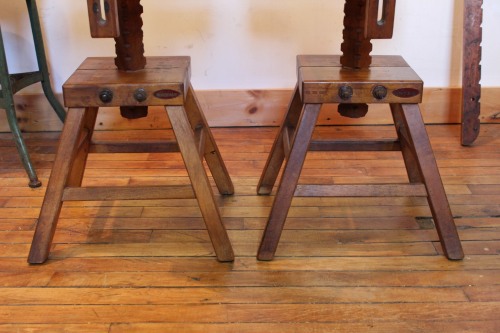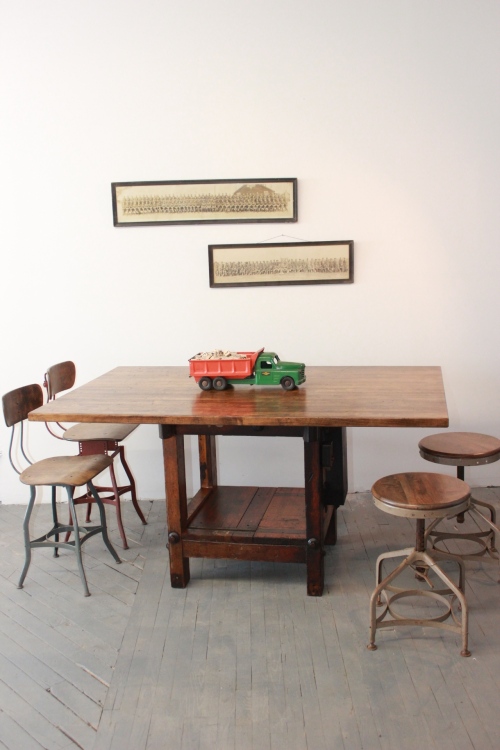
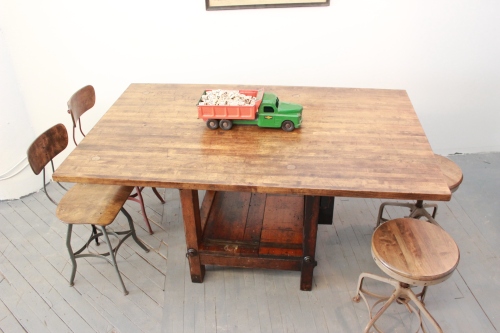
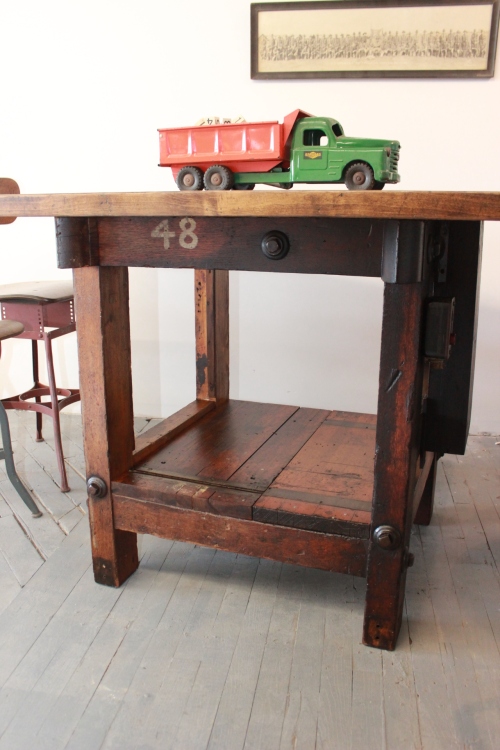
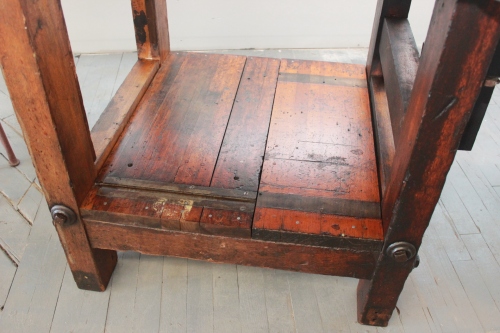
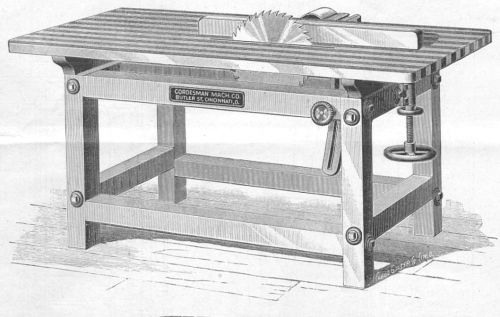
Corner Shop: Workbench By Industrial Bench and Equipment Manufacturing Co, ca. 1940s

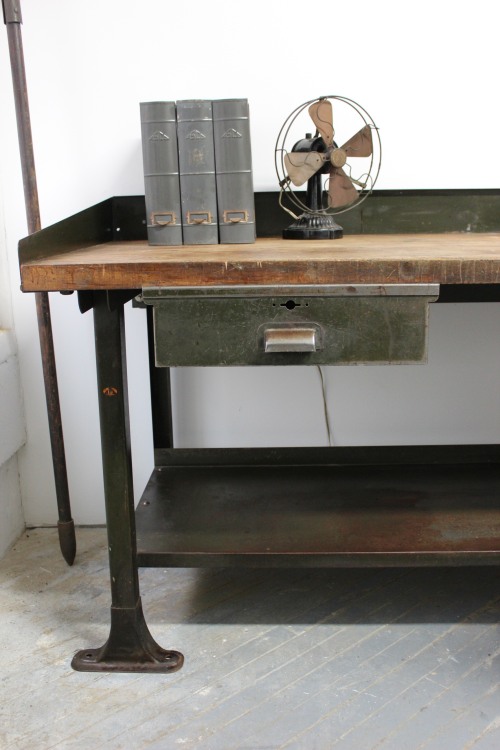
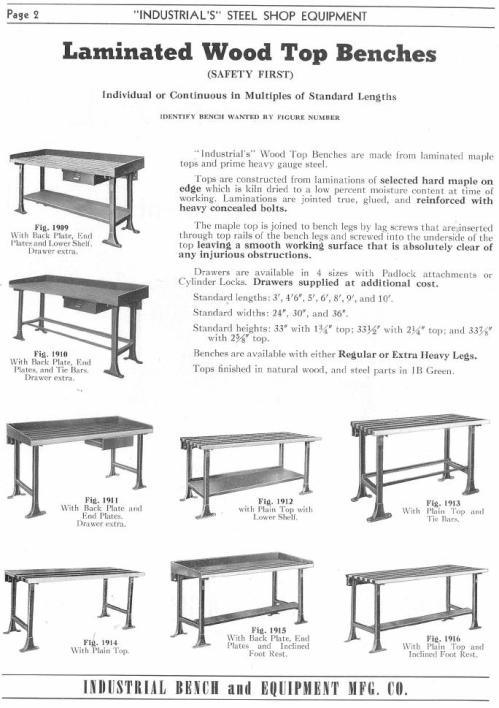
IMG_7506IMG_7507 IMG_7520 IMG_7526 IMG_7531 IMG_7538 ib1ib2ib3While admired today for their aesthetics, vintage and antique industrial furniture was considered utilitarian in its day. It was built using durable materials and therefore fabricated to withstand considerable punishment. Though it is appealing to unearth an unusual piece like this shop bench, it is doubly worthy of attention when the item possesses its original and untouched configuration and presents in superb condition.

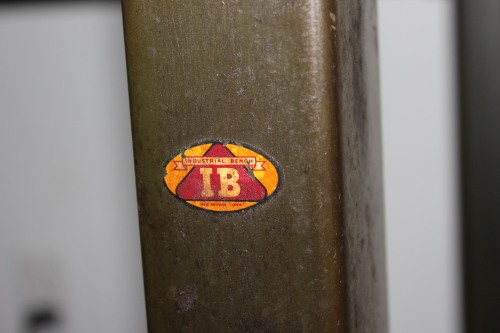
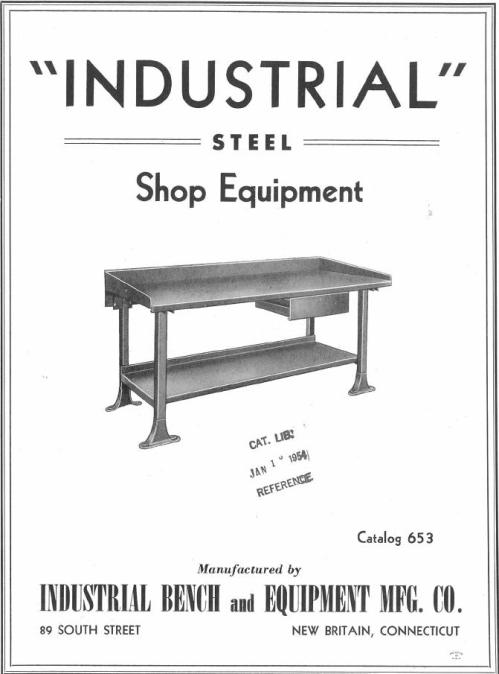
The Industrial Workbench and Equipment Manufacturing Company was a later incarnation of The New Britain Machine Company, headquartered in New Britain, CT. They began churning out heavy-duty industrial furniture at the beginning of the 20th century and by the 1940s were known as, I.B. (Industrial Bench). The olive hew finish of their products was even referred to as, “IB Green”.

The discussion of quality is a common thread when referencing items of this era and I.B. prided themselves on creating equipment of a higher standard than many of their peers.

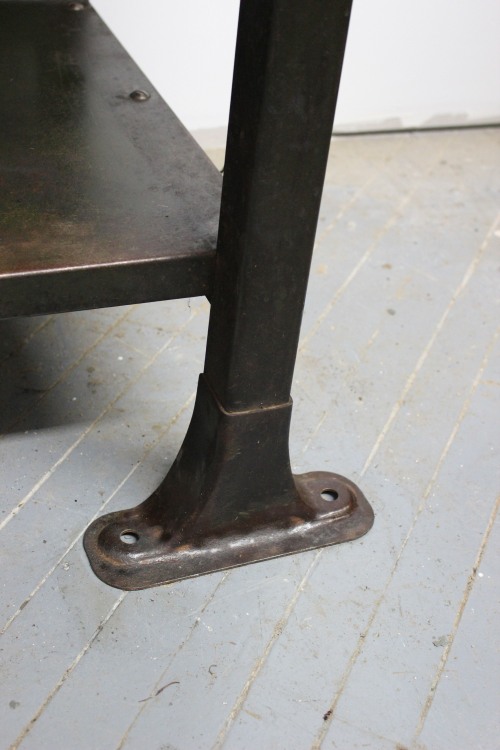
The heavy-gauge tubular steel leg sections are welded together, making a single-piece, rigid leg. This results in less sway, irrespective of whether or not the table rests against a wall. The legs and expansive feet are totally closed thus ensuring that dust and other unwanted waste does not accumulate in cracks and crevasses. A variety of optional extras existed including, rear and side plates (to ensure that materials did not fall from the work surface), maple or plain steel tops, lower shelf and drawers, complete with sliding inner tray.
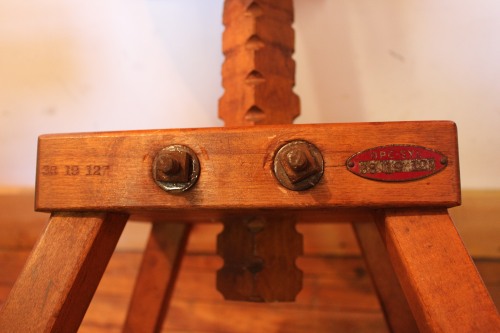
This clean, original example not only possesses its factory configuration, including a drawer and lower shelf, the IB Green finish is excellent and the maker’s labels are clear and visible on the trademarked positioning of the two front legs.
*Special thanks to the Smithsonian Institution Archives and the National Museum of American History Library for their generous contributions to this post.
Top Brass: Weldon Lamp, ca. 1930s

IMG_7253IMG_7247IMG_7240IMG_7243IMG_7237

Much is made of a handful of manufacturers’ interpretations of the task lamp. Some have been highlighted in this blog: Ajusco, O.C. White, Edon, American Fixture Co. and more. These producers adhered to a strict code of pared-back design and unadulterated utility.

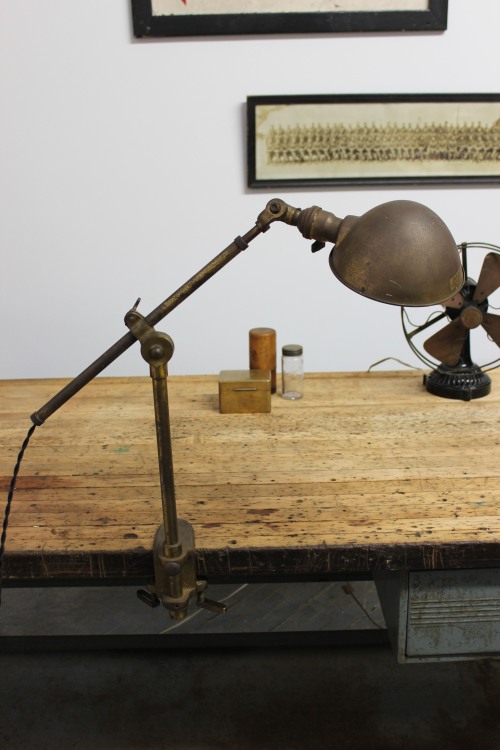
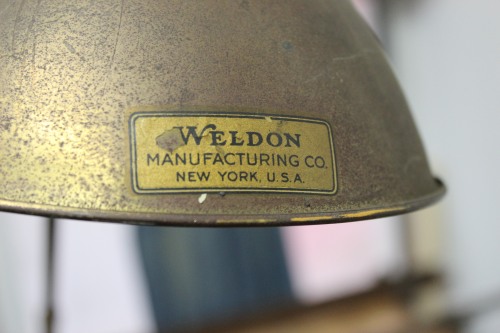
Add to this group Weldon Manufacturing Co., a quiet achiever in the brass, drafting-style light arena. This New York company created ranges that included desk, clamp-based and floor lamps.

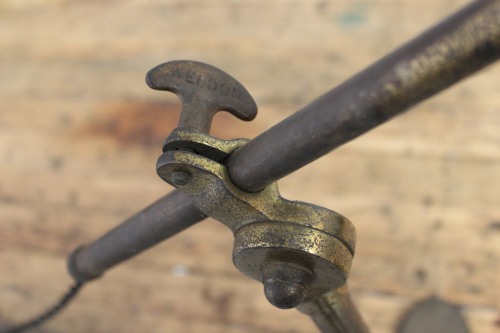
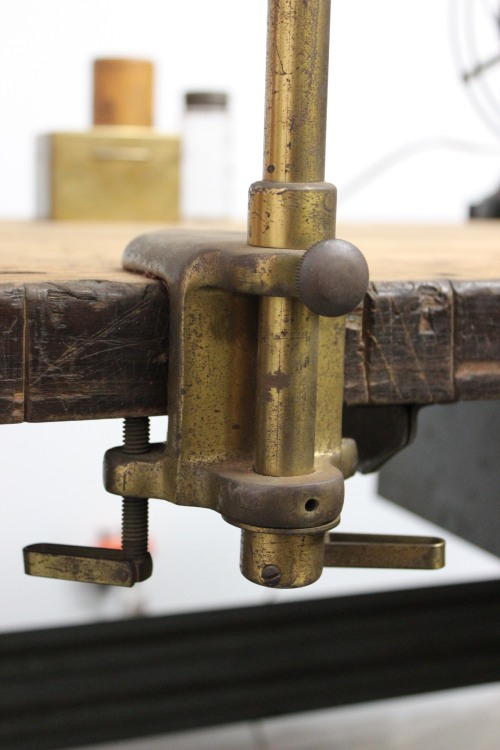
This example, with a dual-clamp base, maximizes the ease in which the fixture can be relocated. While this feature proved advantageous in drafting scenarios, it was also embraced in workshops and garages alike. Also, the wide, embossed wing nut proved an ergonomic method of tightening the joint around the lamp’s telescopic arm.

The Coolest of Uhl: How To Buy A Toledo Stool

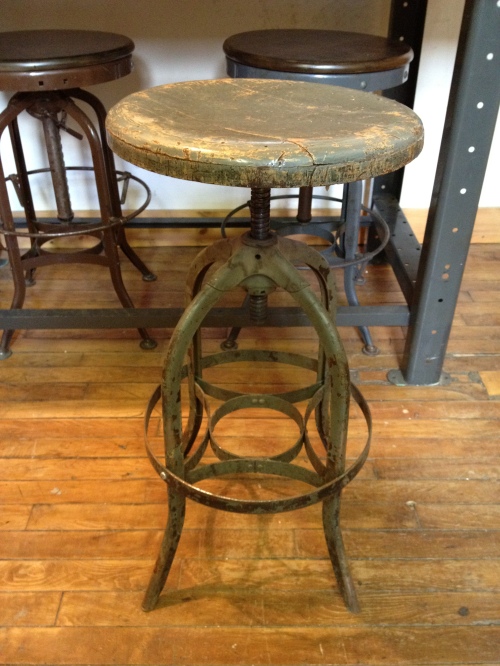
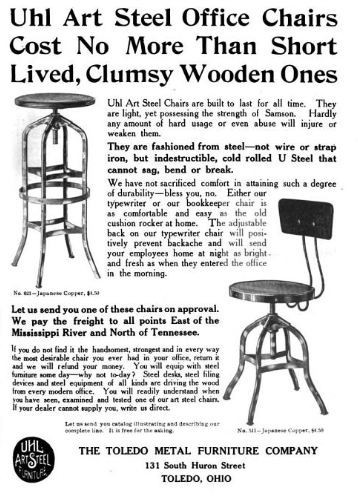
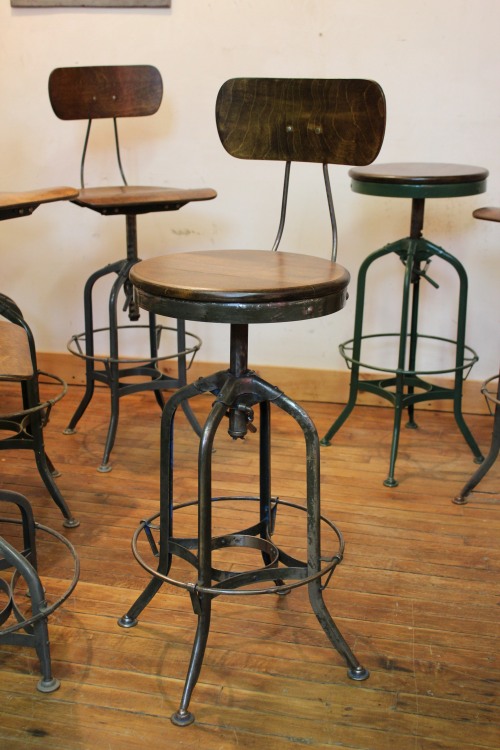
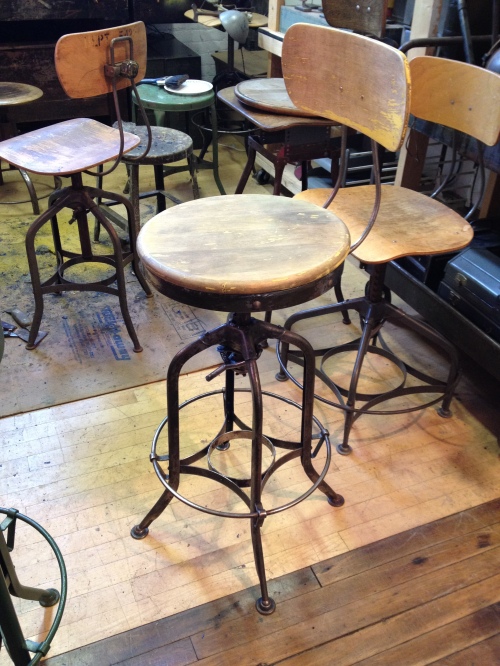
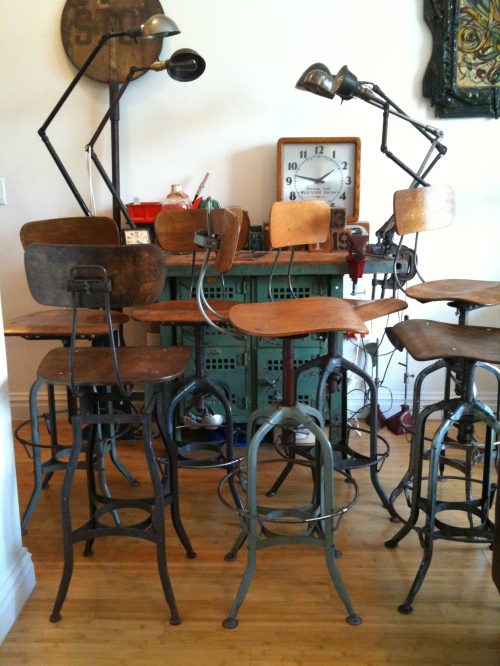
IMG_5136IMG_3216IMG_5586Dorset Finds is frequently asked what to look for when buying a Uhl Toledo stool or chair. Generally speaking, these items were built to last; however, below are some invaluable guidelines that will ensure the piece purchased meets  your needs and continues to perform for many years to come.

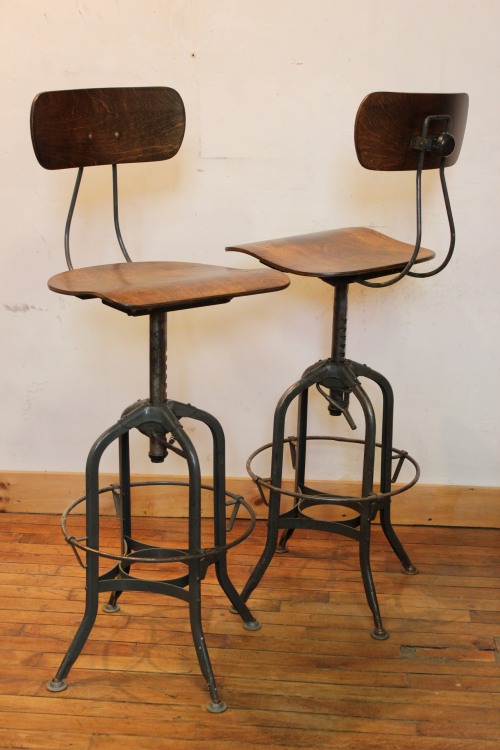
1. Establish the height you need. Much of Toledo’s seating is height-adjustable. That said, Draftsman stools are generally too tall for standard-height dining tables and desks, so you may require a chair instead.

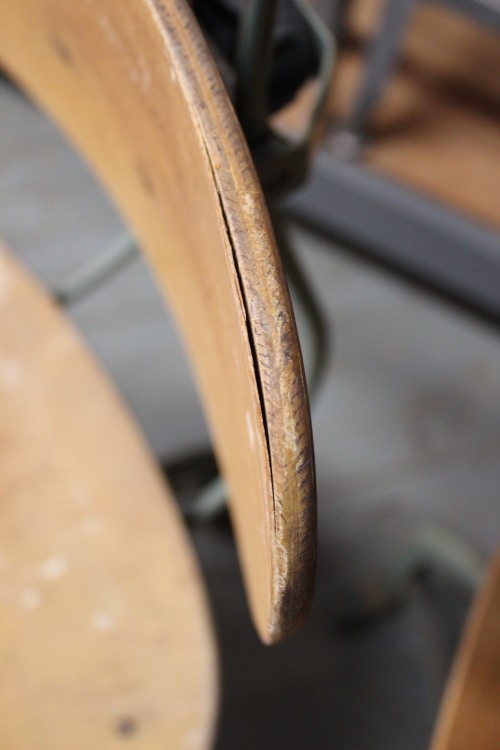
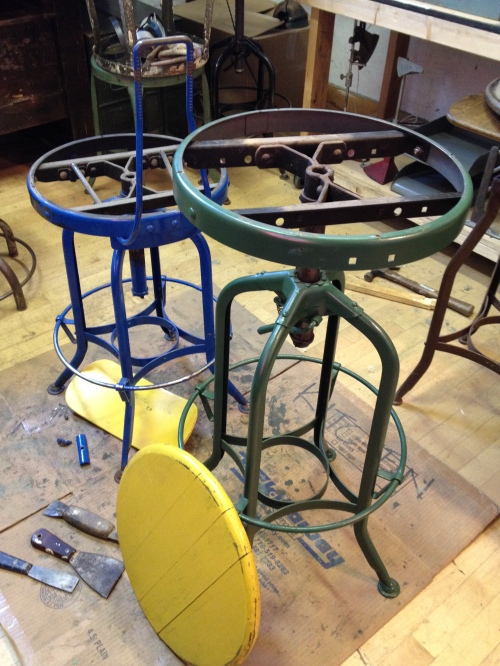
IMG_70012. Assess the condition of the plywood seat and backrest. Being the most fragile components of the piece, the wood sections are prone to chipping and delamination. Minor separations can be easily fixed with wood glue.

IMG_7000 red3. Assess the wishbone lever arm. Look for any separations or breaks in the steel loops that cover the ends of the lever. These loops are susceptible to metal fatigue, especially if the original spring has been lost (major red flag) or replaced by a non-original part. The lever arm’s anchors are a crucial stress area in the chair’s design. A key sign that the integrity of this piece has been breached is wobbling in the seat post. If a break is detected, the example is best avoided.

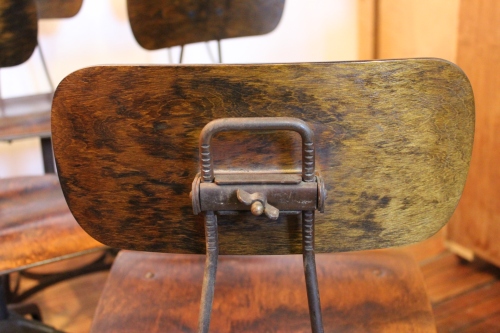
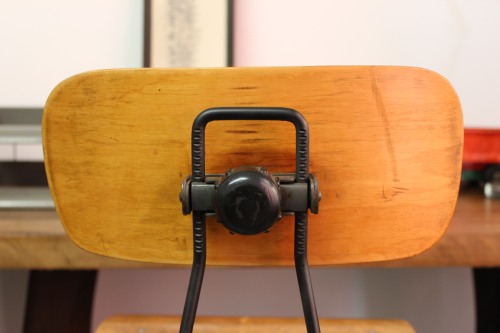
IMG_2232IMG_52154. Look for non-original parts. As time passes, utilitarian furniture within an industrial setting is expected to be mistreated and continue to work. If damage was sustained, in some cases readily available parts were retrofitted purely out of a need for the chair to remain functional. Older models should feature a wing nut and brass spherical nut cap at the rear of the backrest. In later versions this was replaced with a black, round, hardened-plastic turning knob. Ensure that both the backrest and seat have contours. If either of these parts are flat, they’re replacements.

Aside from these structurally driven suggestions, the aesthetics are really a subjective element. Whether one likes rust and chipped paint, wood that’s faded or a glossy varnish, these tips will arm one with the necessary tools to go forth and buy well.

A Call to Arms: Articulating Light by American Fixture Company, ca. 1920s

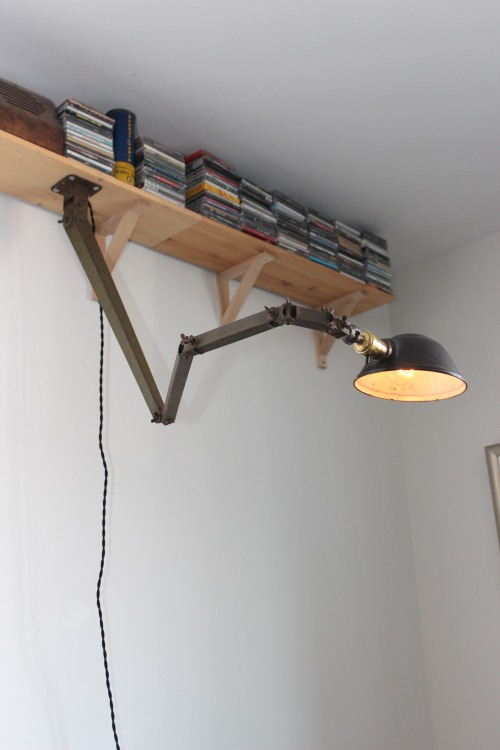
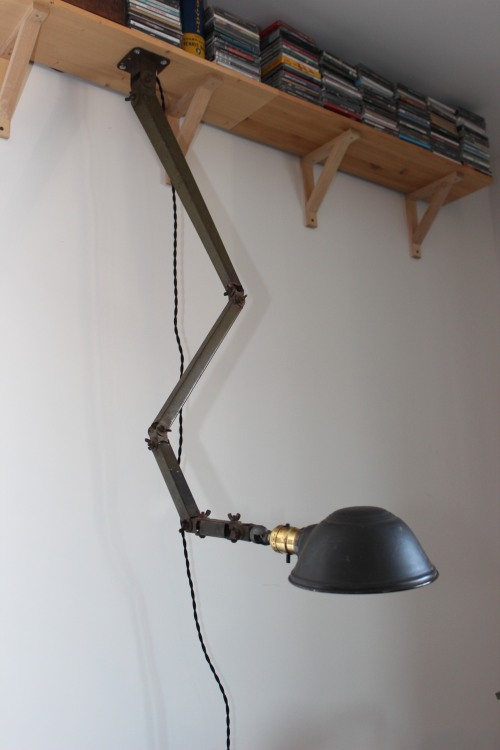
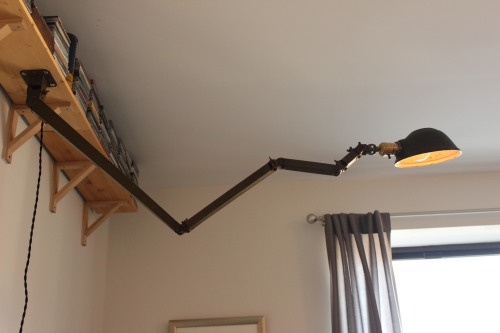
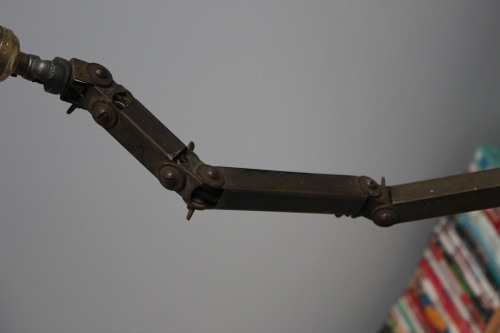
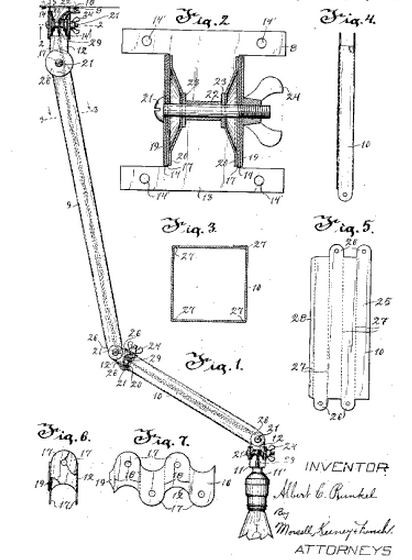
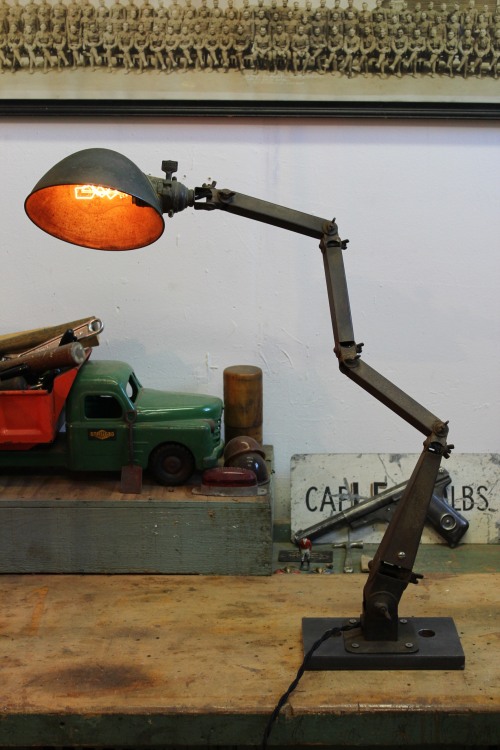
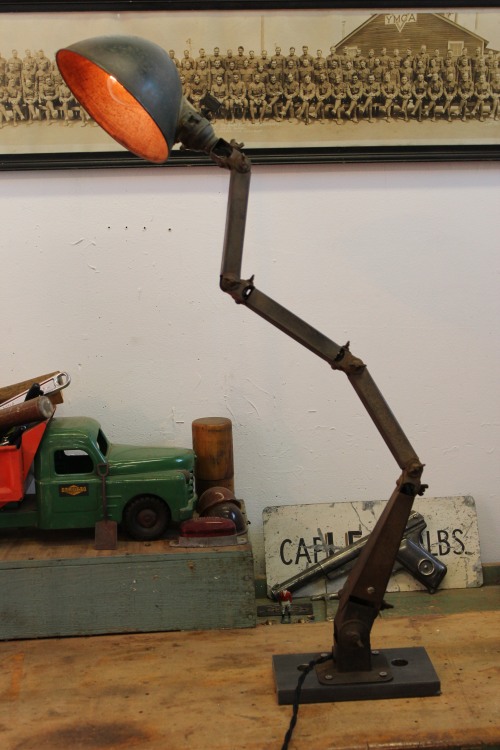
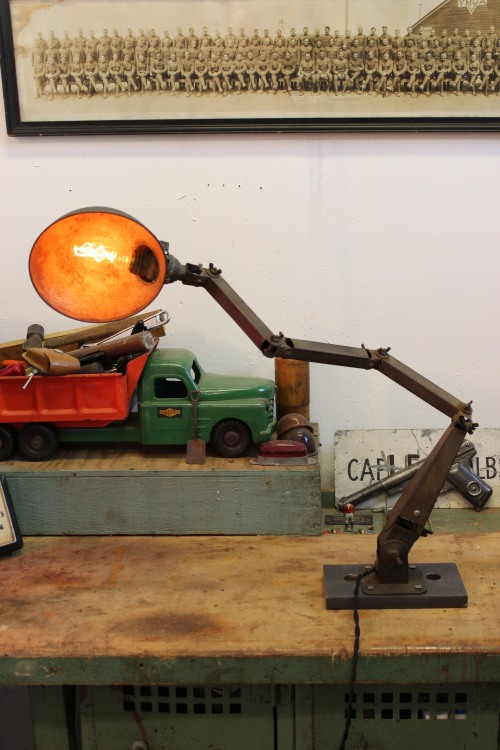
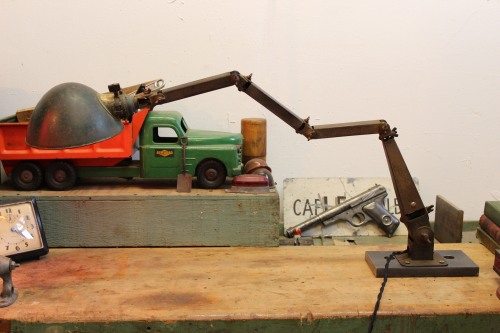
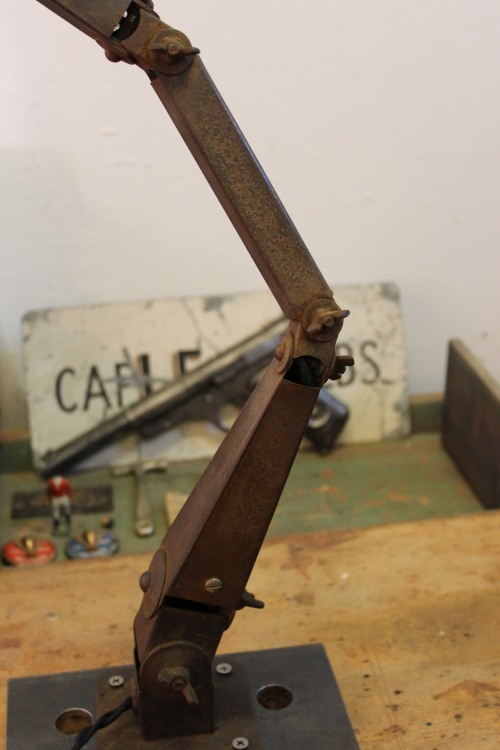
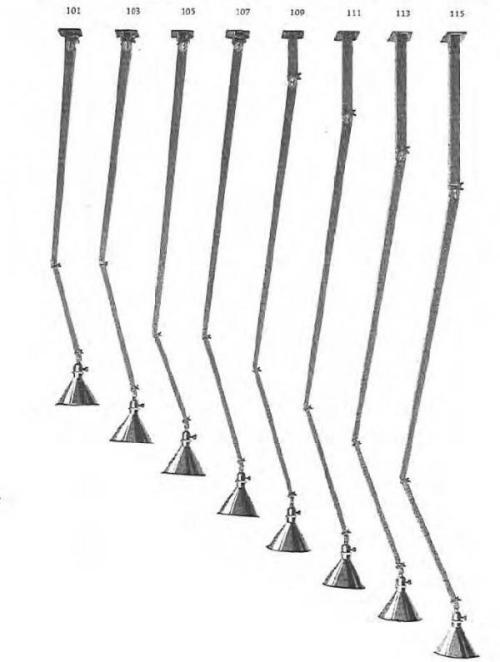
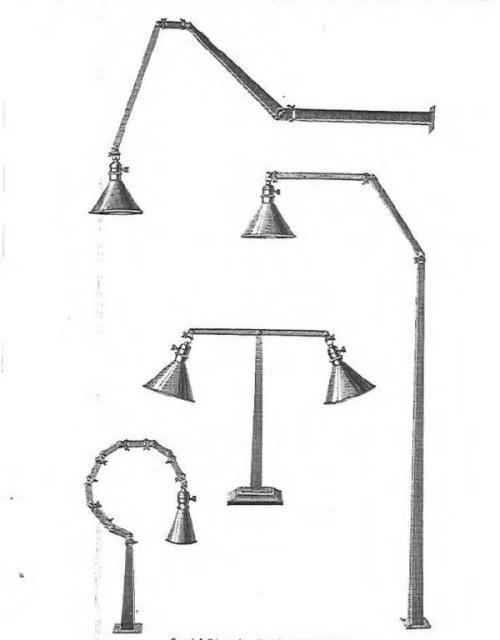
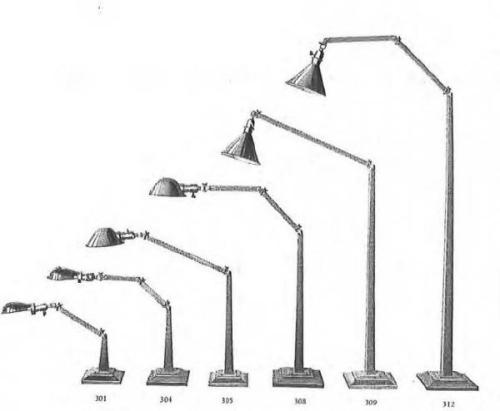
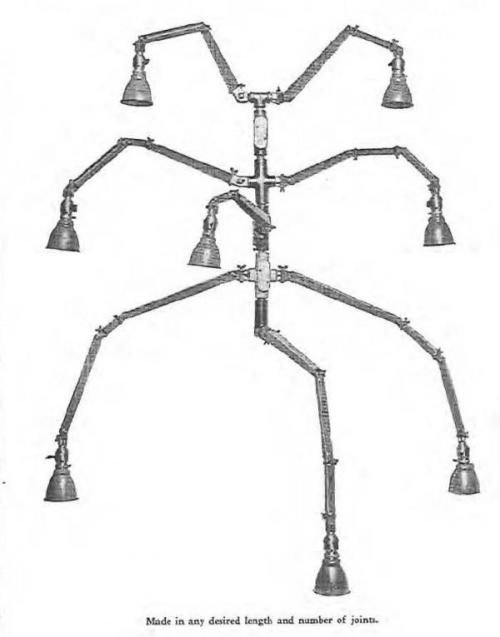
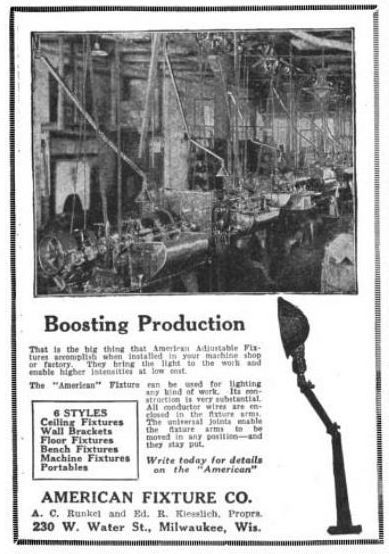
Regular Dorset Finds readers will remember a post from earlier this year about the American Fixture Co. stable of industrial lighting. The mostly overlooked and underrated Milwaukee firm produced lamps with a mesmerizing array of movement, thanks to the unique double-knuckle system. While simple, the design provides freedom to illuminate a wide range of space.

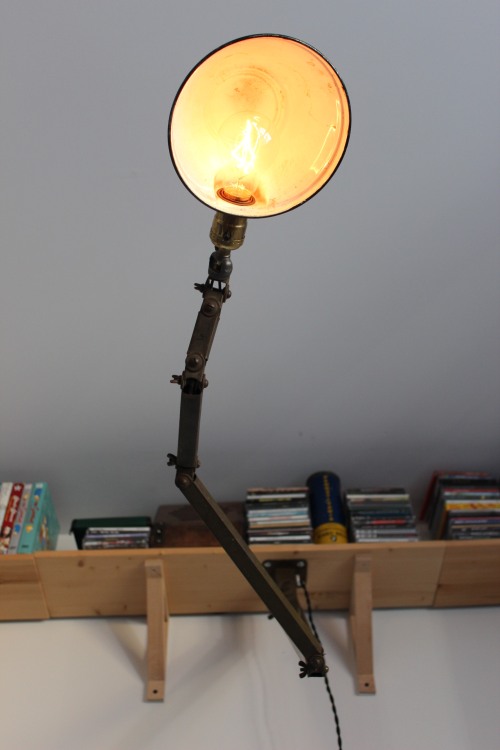
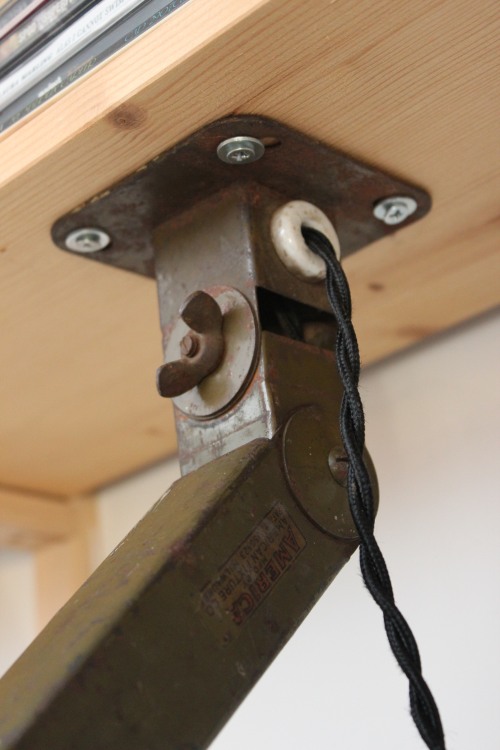
This example carries an impressive 58-inch reach, while the longest single arm measures 2 feet. In total, 10 knuckles provide great flexibility and articulation. The white porcelain cord insulator is intact, and this example possesses the original manufacturer’s label.

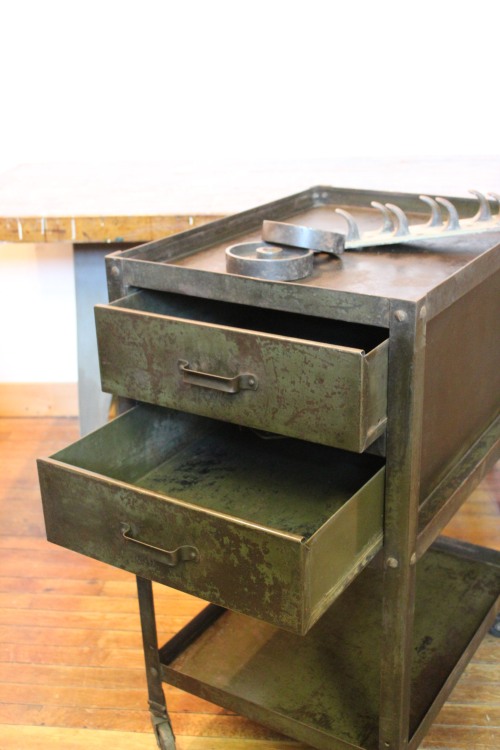
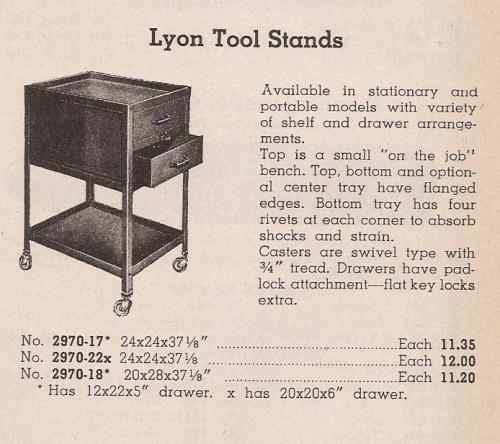
Heavy-Duty Rolling Work Station Cabinet, ca. 1940s

An occupational hazard of repairing and restoring old wares is that one becomes a magnet for a diverse collection of tools, parts and hardware. As time passes, one tool box is filled, then another and another. The resulting game of multiple choice when searching for the right item can be harrowing.

When the time came to upgrade to a larger source of storage, Dorset Finds was pretty thrilled to stumble across a heavy-duty rolling work station.

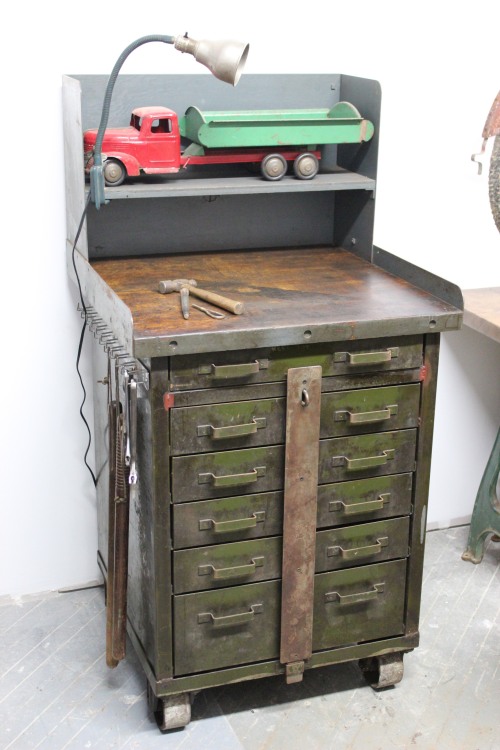
The only thing better than a tool box with 25″ deep drawers is one with a solid butcher block top and a retrofitted shelf. Other customizations include a row of hooks that line one side of the piece; perfect for organizing readily used tools and parts and keeping them off the work surface. Frequently misplaced in other examples is the original solid steel lock plate, that when dropped into a lip on the lower front of the unit, forms part of a mechanism which secures all the drawers. As we found out, large cast iron casters are also a godsend when shifting the full cabinet from one side of the workshop to the other.

Meet the Press: Delta Drill Press, ca. 1940s

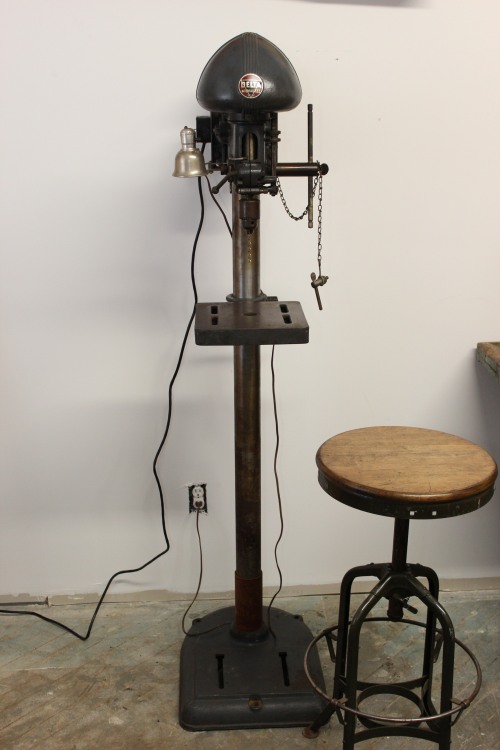
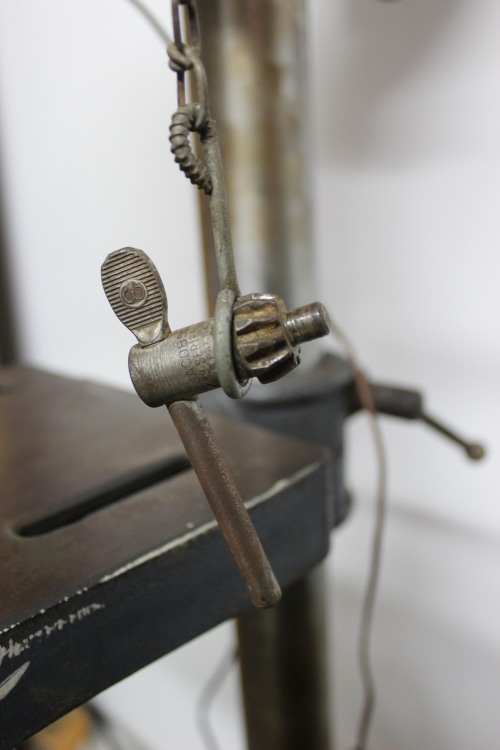
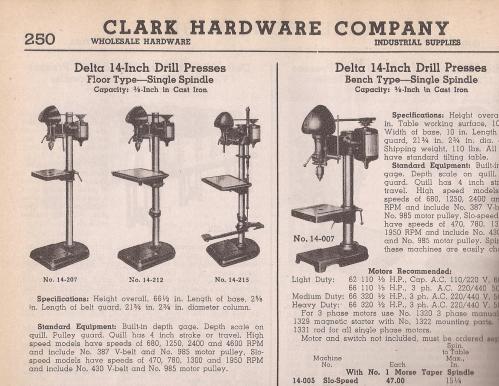
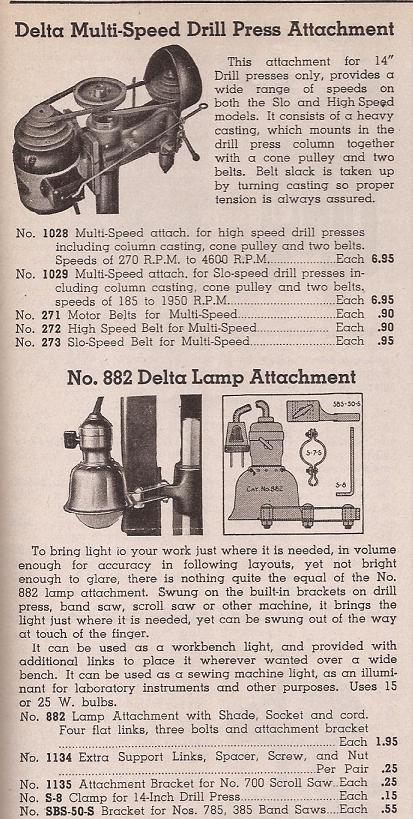
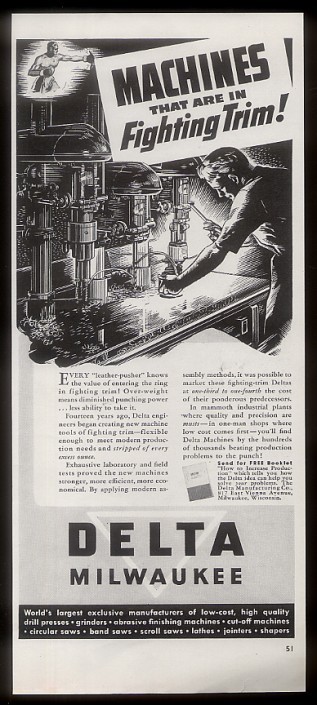
With each new project that Dorset Finds undertakes, an appreciation for  implementing the correct tool for the job intensifies. Overhead costs and environmental concerns are always front of mind, therefore buying older American-made tools ticks all the boxes in a practical sense. They were built to last and the carbon footprint of one of these gems is much smaller than a new, cheaply made imported version. The bonus with the Delta DP (drill press) 220 is that not only was it engineered to a high standard, aesthetically its Buck Rogers styling cues speak to the design ethos of that era.
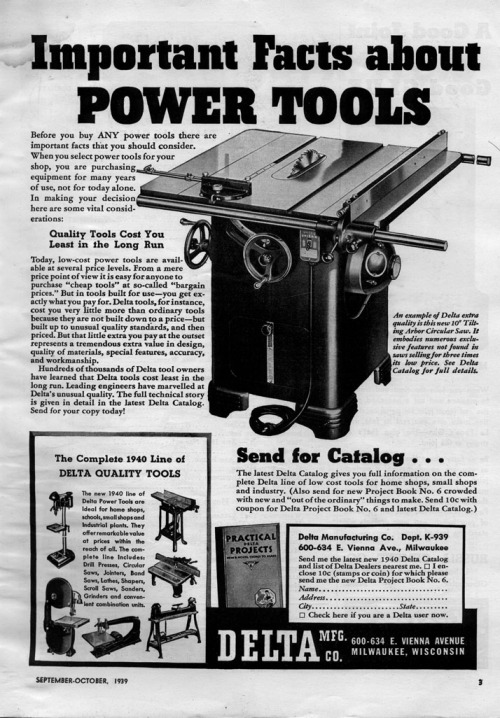
In 1919, the Delta Specialty Company was founded by Herbert Tautz and run out of his garage in Milwaukee, WI. Started as a manufacturer of tools for the home shop, the company quickly expanded to produce light-industrial machinery. The Delta brand – which quickly became synonymous with quality and affordability – specialized in drill presses, heavy-duty saws, grinders and lathes.
Vintage tool and machinery enthusiasts are growing in number and recognize not only the collectibility of these fine artifacts of industria, but also the need to preserve them.
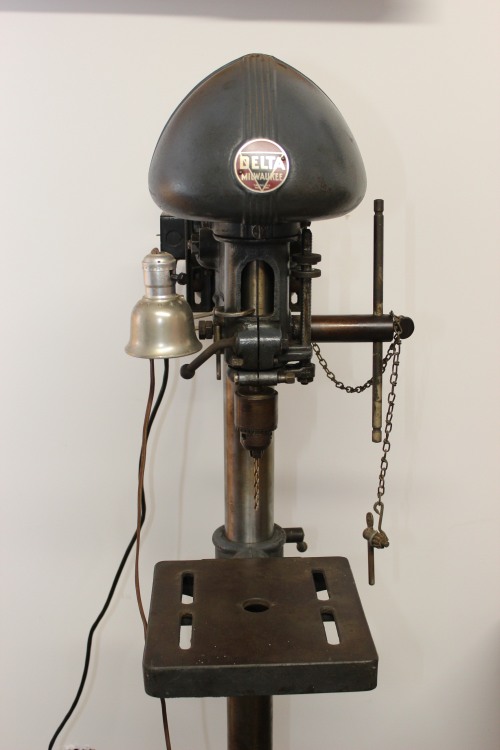
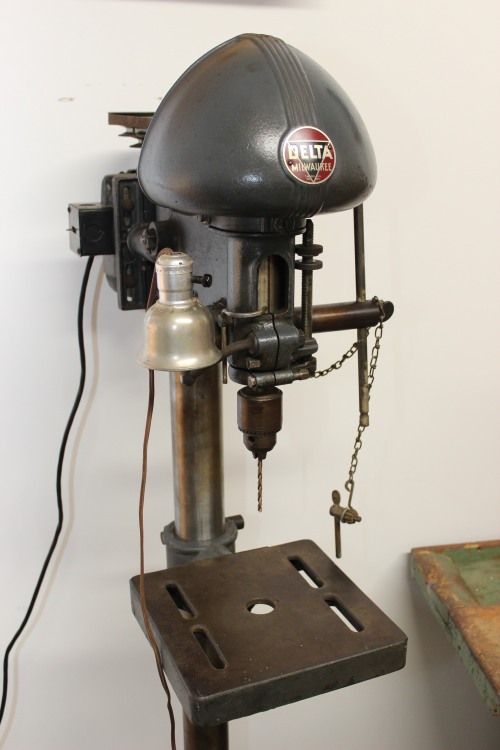
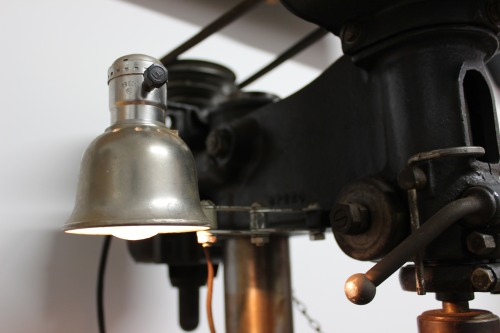
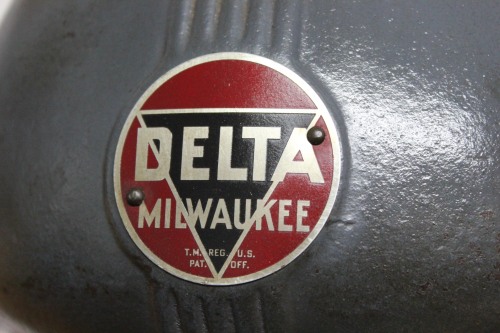
Though well-used, this drill press retains much of its original battleship gray finish. The motor purrs from behind the cast iron front pulley guard while the original Delta aluminum light provides illumination to the work space below the chuck. This unrestored example also possesses a particularly fine example of the maker’s badge.

*Special thanks to Nick and the other members of the Old Woodworking Machines forum.

See Worthy: Good Form Navy Chairs, ca. 1939

Dorset Finds is reticent to throw around the phrase “design classic.” Sure, some pieces are built to last and serve a purpose, and others are aesthetically appealing, but it’s the combination of these factors that propels an item toward greatness and, therefore, icon status.

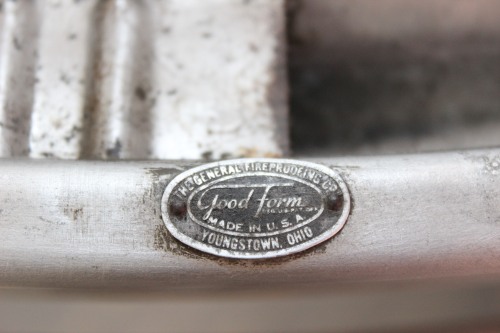
In 1930, the General Fireproofing Co. launched its foray into aluminum chair production and rolled out the Good Form seating line in 1932. They had just built a new factory with state-of-the-art machinery and conveyor systems designed specifically for this new direction. Prior to the move, the company had focused exclusively on steel furniture, so the $1 million investment in diversifying into aluminum before a single product had left the factory was a substantial one.

Initially, timing proved to be their enemy. Aluminum chairs were more expensive than wooden ones, and with the advancement of the Depression, the cost-conscious were dubious of the new line’s merits. Being the first company to nationally market an aluminum chair, General Fireproofing had their work cut out for them. The Aluminum Company of America (ALCOA), which held patents and designs for several institutional chairs, sold all rights to GF in 1934, giving them an even greater slice of the market.

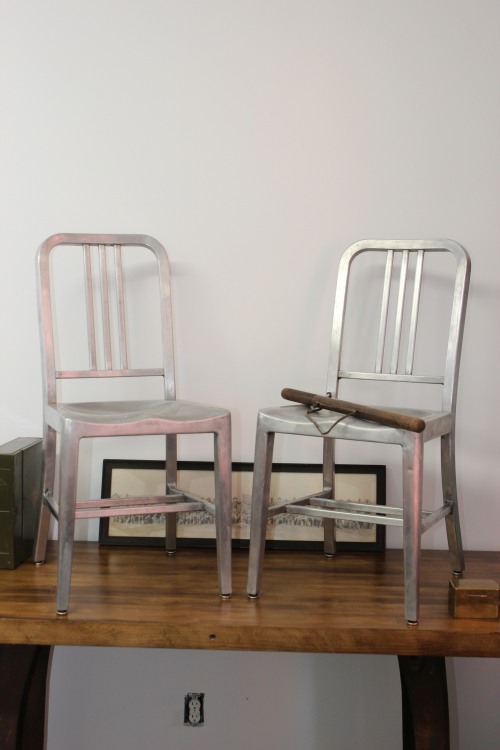
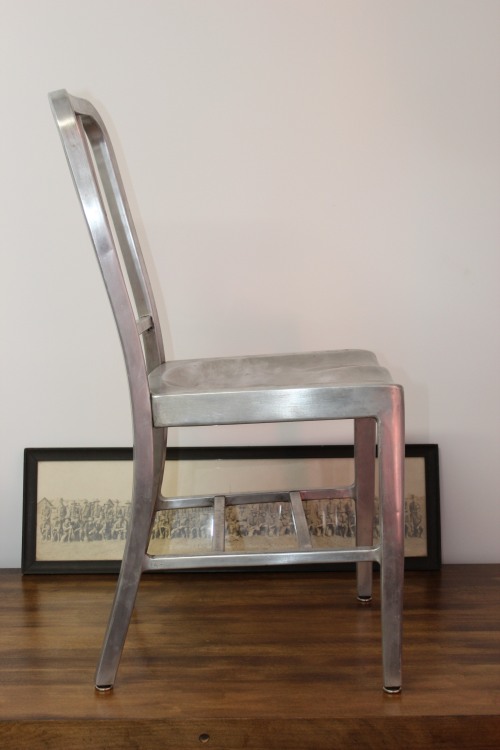
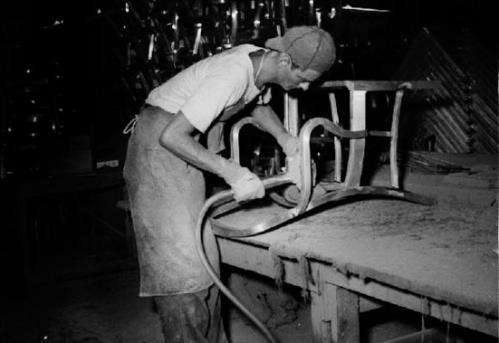
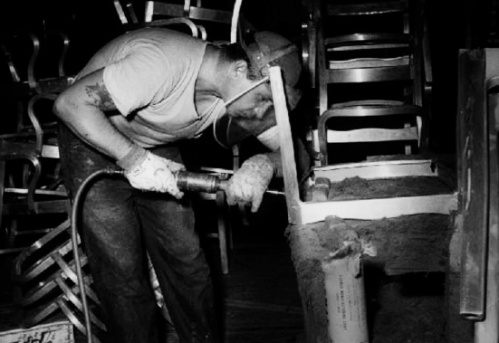
Upon the request of the U.S. Navy in 1936, a new range of aluminum chairs was created to be stationed aboard all naval vessels. Durability was of great importance: should a destroyer be hit by a torpedo, the chairs were required to withstand the blast! Also, it was imperative that the materials not gradually degenerate through exposure to moisture — as was the case with steel or wood — and the chair’s structural integrity must remain preserved. In all, there are only 12 welds on a Navy chair, and these are filed down to give the appearance of seamless joins.

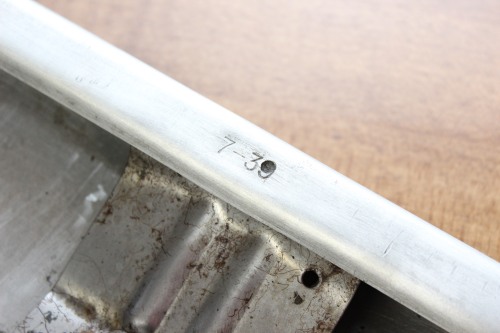
This is an exciting pair, as they come from a very early production run. There is minimal age to the surface of the aluminum, and what patina is evident only serves to share some of the chairs’ history.